


Last Updated on March 11, 2025 by Jess Brown
St Patrick’s Day 2025 falls on a Monday, March 17th, bringing its familiar wave of green beer, parades, and shamrock decorations to cities across America. But beneath those festive trappings lies something much older and more meaningful than most people realize. I’ve always found myself wondering about the deeper significance behind the celebrations we take for granted.
What if this holiday could be more than just wearing green and avoiding pinches? What if, like so many cultural celebrations, St Patrick’s Day holds ancient wisdom that still speaks to our modern hunger for meaning and connection?
The truth is, this holiday sits at a powerful junction in the seasonal calendar—right as winter releases its grip and spring energy begins to rise. For the ancient Celts, this timing wasn’t coincidental but deeply significant. It marked a threshold between seasons, a perfect moment of transformation and new beginnings.
In this post, I’m sharing how you can tap into the often-overlooked spiritual dimensions of St Patrick’s Day. Whether you’re looking for meaningful ways to celebrate in 2025 or simply curious about the deeper currents running beneath the surface of this familiar holiday, you’ll find practices and perspectives that transform a commercialized celebration into a personal ritual for growth and renewal.
St Patrick’s Day 2025: Beyond Green Beer and Shamrocks
When March 17th, 2025 arrives, most people will automatically reach for something green to wear, maybe plan to catch a parade, or book a table at an Irish pub. These modern traditions have their charm, but they barely scratch the surface of what this day could mean for you.
St Patrick’s Day 2025 happens to fall at a particularly potent time. Coming just a few days before the Spring Equinox (March 20th), it sits within what the ancient Celts would have recognized as a threshold period—a time when the balance between dark and light shifts, and new growth becomes possible. This timing creates a natural opportunity for reflection and intention-setting that goes far beyond the typical celebrations.
What makes the 2025 celebration unique is how it bridges a Monday, bringing this renewal energy directly into our work week. Rather than seeing this as an inconvenience for party plans, you might view it as an invitation to bring these renewal themes into your everyday life—not just reserving them for weekend celebrations.
As we step further into this decade of unprecedented change and uncertainty, these ancient practices of marking seasonal transitions take on new relevance. They offer us grounding rituals and perspectives when much of modern life feels unmoored from the natural rhythms that guided our ancestors.
What Is Saint Patrick’s Day? The Story Behind March 17th
Why is St Patrick’s Day celebrated on March 17th? This date marks the traditional death date of Saint Patrick, the patron saint of Ireland who lived during the fifth century. Born in Roman Britain, the young Patrick was kidnapped and taken to Ireland as a slave. After escaping and returning home, he later felt called to return to Ireland as a missionary, bringing Christianity to the island’s predominantly pagan Celtic population.
But here’s what most holiday articles won’t tell you: the March 17th date holds significance beyond just commemorating a saint’s death. It falls during a critical transition point in the Celtic year—the shift from winter’s darkness into spring’s increasing light. The timing wasn’t random, but deliberately chosen to align with existing seasonal celebrations that honored renewal and rebirth.
When Patrick used the shamrock to explain the Christian trinity, he wasn’t just creating a convenient teaching tool—he was deliberately drawing on existing Celtic reverence for the power of three and the sacred nature of plants. This wasn’t cultural erasure but a thoughtful integration of new ideas with respected old ones.
What often gets lost in the green beer and leprechaun imagery is how Patrick’s approach to spiritual conversion was unusually respectful for his time. Rather than demanding Celtic people abandon their understanding of the world, he found bridges between their existing spiritual framework and his Christian teachings. He recognized the wisdom already present in Celtic culture and worked within it rather than against it.
This pattern of blending rather than erasing is something we see throughout spiritual history, reminding us that wisdom rarely arrives in completely new packages—it builds upon what came before, adding new dimensions rather than replacing everything wholesale.

The History of St Patrick’s Day Through a Spiritual Lens
Ancient Celtic Roots
Long before Patrick arrived in Ireland, the Celtic people celebrated spring, with festivals honoring their deities and the return of fertility to the land. The placement of St Patrick’s feast day near the spring equinox wasn’t accidental—it strategically aligned Christian celebrations with existing Celtic spiritual observances, creating a sense of continuity rather than disruption.
Sacred Symbols and Their Evolution
What’s interesting is how the spiritual elements of both traditions survived in folk practices. The shamrock, now associated with Patrick’s teaching about the trinity, carried spiritual significance for Celts long before Christianity arrived. Triple patterns and forms were sacred in Celtic spirituality, representing the three realms of existence: earth, sea, and sky. The number three appeared throughout their spiritual practice as a representation of wholeness and completion.
Holy Places and Sacred Waters
Water sources blessed by Patrick became pilgrimage sites, but these were often places already considered sacred by the Celts—natural springs and wells that were believed to have healing properties and connections to the otherworld. This blending created uniquely Irish expressions of spirituality that honored both traditions simultaneously.
The Meaning Behind the Green
Even the emphasis on green that dominates modern celebrations connects to earlier spiritual understandings. For the Celts, green represented life, growth, and the fairy realm. The Christian tradition adopted this color association while connecting it to Ireland’s lush landscape — nicknamed “The Emerald Isle” for good reason.
I find it interesting how these layers of meaning can exist simultaneously within a single tradition, neither canceling the other out but creating something richer through their coexistence. It reminds me that spiritual wisdom doesn’t always need to be an either/or proposition, but can embrace complexity and nuance.
The Significance of St Patrick’s Day for Modern Spiritual Seekers
Natural Transition Points
I’ve found that seasonal transitions provide natural moments to pause and reassess. St Patrick’s Day arrives just as winter releases its grip, making it an ideal time to consider what we need to release and what we hope to cultivate. This practice of intentional transition isn’t just symbolic—it aligns with the natural energy shifts happening around us.
Finding Unity in Diverse Traditions
The holiday’s connection to both Christian and Celtic traditions offers a beautiful example of spiritual integration rather than division. In our increasingly polarized world, there’s something deeply refreshing about celebrating a holiday that honors multiple spiritual streams flowing together. It reminds us that wisdom can come from unexpected sources and that different traditions often speak to the same human experiences.
Connecting with Nature’s Wisdom
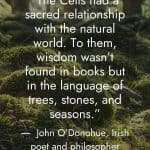
For those of us drawn to Celtic spirituality without wanting to appropriate or claim expertise, this holiday provides a respectful entry point. The Celts understood something many of us have forgotten—that the natural world isn’t separate from spiritual practice but integral to it. Observing their seasonal celebrations helps us notice the subtle shifts in light, growth, and energy around us—something our ancestors were keenly aware of.
Creating Meaningful Anchors in Time
I’ve noticed in my own practice that connecting to seasonal energy isn’t complicated, but it is profound. Around St. Patrick’s Day, I notice spring’s arrival, set growth-oriented intentions, and create transitional rituals. This grounding practice makes me feel more purposeful. These practices create anchors in time that give structure and meaning to the otherwise blur of days.
The holiday also offers us permission to celebrate—something our achievement-focused culture often devalues. The joy and community spirit of St Patrick’s Day reminds us that celebration itself can be a spiritual practice, a way of expressing gratitude for life and connection.

St Patrick’s Day Meaning: Celtic Spirituality Meets Christian Tradition
Spiritual Dialogue Between Worldviews
The St Patrick’s Day meaning we celebrate today emerged from a fascinating spiritual dialogue between two seemingly opposite worldviews. Rather than a simple case of Christian conquest over pagan beliefs, what happened in Ireland reveals a more nuanced spiritual evolution where both traditions influenced each other.
The Wheel of the Year and Calendar Integration
The Celts lived by a circular understanding of time, organized around eight major festivals that marked significant points in the solar year. Their spring celebrations honored Brigid, a powerful Celtic goddess associated with poetry, healing, and smithcraft. When Christianity arrived, rather than stamping out this beloved figure, the tradition absorbed her as St. Brigid, maintaining many of her attributes and associations.
Would you like to save this?
Unsubscribe any time and I'll never share your information.
Sacred Places and Spiritual Geography
This pattern of integration, rather than erasure, created a uniquely Irish spiritual landscape. Sacred wells dedicated to Celtic deities became associated with Christian saints. Ancient stone circles were incorporated into Christian sacred sites. Even the famous Celtic cross represents this blending, combining the Christian symbol with the Celtic circle representing the sun and eternal life.
The Shamrock as a Symbol of Integration
I find it meaningful how the shamrock itself perfectly symbolizes this spiritual integration. Already sacred in Celtic tradition, Patrick didn’t erase its significance but added a new layer of meaning that complemented rather than contradicted its original importance. This approach offers a powerful model for how we might hold seemingly contradictory spiritual insights today—not forcing an either/or choice, but recognizing how different traditions might illuminate different aspects of the same truth.
Balancing Earth and Heaven
The subtle interweaving of traditions created a rich spiritual tapestry that honored both the earth-centered wisdom of Celtic practice and the transcendent focus of Christianity. This balance between immanence (finding the sacred in the physical world around us) and transcendence (connecting to something beyond the material world) offers modern seekers a holistic approach that many find missing in purely secular or purely religious frameworks.
What I find most compelling about this blended tradition is how it maintained the Celtic reverence for the natural world while incorporating a Christian emphasis on compassion and service. Rather than seeing nature and spirit as separate domains, Irish spirituality kept them intertwined, maintaining a vision of sacred landscapes where divine presence could be experienced directly through interaction with the natural world.
Meaningful Ways to Honor St Patrick’s Day 2025
Creating Your Own Threshold Ritual
When St Patrick’s Day 2025 arrives next March, you’ll have a choice between joining the green-beer crowds or creating a more meaningful personal celebration that connects to the holiday’s deeper currents. Having tried both approaches over the years, I can tell you that the latter leaves me feeling nourished rather than depleted.
Creating your own threshold ritual acknowledges the holiday’s placement at winter’s end and spring’s beginning. Find a quiet moment on March 17th to sit with a journal and reflect on what you’re ready to release from your winter season. What habits, beliefs, or situations have served their purpose and can now be composted? Then consider what you’re ready to cultivate as spring’s energy rises. This simple reflection practice creates continuity with ancient Celtic recognition of seasonal transitions.
Working with the Four Elements
Another powerful practice involves working with the four elements that were sacred in Celtic spirituality. Create a small altar with symbols of earth (stones, soil, seeds), water (in a small bowl), fire (a candle), and air (feathers or incense). Spend time with each element, considering how it appears in your life and what wisdom it might offer you in this seasonal transition. This practice reconnects you to the elemental awareness that our ancestors maintained as a central part of their spiritual understanding.
Finding Your Own Thin Place
The Celtic concept of “thin places”—locations where the boundary between ordinary and spiritual reality seems especially permeable — offers another meaningful practice. On St Patrick’s Day 2025, seek out a natural space that feels somehow different or special to you. It might be a garden corner, a park bench beneath a particular tree, or a spot near water. Spend time in silent awareness there, noticing what arises when you allow yourself to experience a place with full attention. This practice honors the Celtic understanding that certain locations carry unique energy and spiritual significance.
Plant Wisdom and Shamrock Symbolism
Working with plants connects you directly to both Patrick’s shamrock teaching and Celtic plant wisdom. Consider growing shamrock (oxalis) as a living reminder of the holiday’s deeper meanings. As you care for this plant, it becomes a daily touchpoint for the integration of spiritual wisdom into ordinary life. Alternatively, research plants that were sacred to the Celts—such as oak, hazel, or rowan—and find ways to incorporate them into your living space or garden as physical reminders of this ancient wisdom tradition.
Sacred Sounds and Irish Music
For those drawn to sound as a spiritual gateway, explore traditional Irish music beyond the pub songs. The harp, considered sacred in Celtic tradition, creates sounds that can facilitate meditation and inner journeying. Creating a playlist of contemplative Irish harp music for St Patrick’s Day 2025 offers a sound bath that connects you to centuries of Irish spiritual expression while creating space for your own inner exploration.
Heart-Opening Practices from the Emerald Isle
Green Energy and the Heart Chakra
One aspect of St Patrick’s Day that’s rarely discussed is its potential for heart chakra work. The holiday’s association with green—the color traditionally linked to the heart chakra in many spiritual systems — creates a natural opening for practices focused on compassion, connection, and emotional healing.
The Celtic Understanding of Heart Wisdom
The ancient Celts understood the heart as more than just a physical organ—they viewed it as the seat of courage, wisdom, and truth. Their warriors were said to fight with heart, their poets to speak from the heart, and their healers to work with heart energy. This emphasis on heart-centered living offers a refreshing counterbalance to our often head-dominated modern existence.
A Simple Heart-Opening Meditation
Try this simple heart-opening meditation inspired by Celtic traditions: Sit comfortably and place your hands over your heart center. Visualize a soft green light glowing within your chest, pulsing gently with each breath. As you inhale, imagine drawing in the vibrant green energy of new growth and renewal. As you exhale, allow this energy to expand throughout your body, dissolving any areas of constriction or blockage. Continue for 5-10 minutes, allowing your awareness to rest in your heart center.
Connecting Through Anam Cara
The Irish tradition of “anam cara” or soul friendship offers another heart-centered practice. The concept describes a relationship of deep spiritual connection and mutual understanding. On St Patrick’s Day, consider reaching out to someone who serves as your anam cara—a person with whom you can be authentically yourself without masks or pretense. Express your gratitude for this connection, which the Celts understood as essential to spiritual well-being.
Forgiveness as a Spiritual Practice
Forgiveness work aligns perfectly with Patrick’s own journey, as he returned with compassion to the land where he had been enslaved. Create a simple forgiveness ritual by writing down something you’re ready to release—a grudge, resentment, or pain from the past. On St Patrick’s Day, safely burn this paper while saying: “As Patrick forgave, I too release this burden. As spring renews the land, I renew my heart.”
Working with Green Stones
Working with green stones offers a tangible way to engage with heart energy. Jade, green aventurine, or malachite can serve as physical touchstones for heart-centered awareness. Hold your chosen stone during meditation, carry it in your pocket on St Patrick’s Day 2025, or place it on your heart center while lying down for a few minutes of quiet reflection. This practice combines a Celtic reverence for the mineral kingdom with focused energy work.

Even More Reading On This Topic:
- Spring Equinox Quotes: A Journey Through Nature’s Perfect Balance
- 30 Powerful Spring Equinox Journal Prompts for Deep Transformation
- Spring Equinox 2025: A Complete Guide to Renewal & Transformation
FAQ: Common Questions About St Patrick’s Day
While most people wear green to avoid playful pinches, the color carries deeper meaning. In Celtic tradition, green represented the fairy folk, the vitality of nature, and the life force itself. When Christianity came to Ireland, this color association continued, with green connecting to Ireland’s lush landscape and St. Patrick’s use of the shamrock. On a spiritual level, wearing green can be viewed as aligning yourself with renewal energy and heart-centered awareness, especially as it coincides with spring’s return.
The St Patrick’s Day meaning shifted significantly when Irish immigrants brought the tradition to America. Originally a relatively modest religious observance in Ireland, it transformed into a more exuberant celebration of Irish identity and pride in America. This evolution reflected Irish immigrants’ need to maintain cultural connections while adapting to a new home. The parades began in the 1700s as a way for Irish Americans to celebrate their heritage in the face of discrimination. What’s fascinating is how this holiday continued to evolve, eventually becoming more about celebrating Irish-American identity than religious observance. This evolution shows how spiritual traditions often shape-shift to meet the changing needs of the communities that carry them.
March 17th marks the traditional death date of Saint Patrick according to historical records. But there’s more to this timing than simple commemoration. The date falls near the spring equinox, a powerful seasonal transition point recognized in many ancient traditions. This positioning allowed the Christian feast day to absorb and transform pre-existing Celtic spring celebrations. The timing creates a natural opportunity for themes of death and rebirth, perfectly aligning with both Patrick’s Christian message and the seasonal energy of early spring in the Northern Hemisphere.
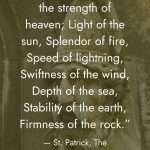
Yes! Irish spiritual tradition is rich with beautiful blessings that bridge Christian and Celtic sensibilities. One of the most beloved is the “St. Patrick’s Breastplate,” a prayer attributed to Patrick himself that calls for divine protection. Its most famous verse reads: “Christ with me, Christ before me, Christ behind me, Christ in me, Christ beneath me, Christ above me, Christ on my right, Christ on my left…” This prayer beautifully exemplifies the Celtic Christian understanding of divine presence permeating every direction and dimension of life. For a more nature-connected blessing, you might use this traditional Irish blessing: “May the road rise up to meet you. May the wind be always at your back. May the sun shine warm upon your face, the rains fall soft upon your fields, and until we meet again, may God hold you in the palm of His hand.”
The beauty of spiritual wisdom is that it transcends cultural boundaries while still respecting origins. You can meaningfully engage with St Patrick’s Day by focusing on its universal themes—renewal, spiritual integration, and the balance between honoring tradition and embracing new understanding. The Celtic spiritual practices of connecting with nature, marking seasonal transitions, and seeking wisdom in the ordinary world are accessible to everyone, regardless of heritage. What matters is your approach—coming with respect, openness, and a genuine desire to learn. Focus on the elements of the tradition that speak to your own spiritual journey while acknowledging and honoring the culture from which these practices emerged.
Embracing the Spirit of St Patrick’s Day 2025
As we look ahead to St Patrick’s Day 2025, I’m reminded that the most powerful spiritual practices aren’t necessarily the most complicated. Sometimes, it’s the simple act of paying attention to the world around us, noticing the subtle shifts of seasons, and creating intentional moments of connection that make the biggest difference in our lives.
The integration of traditions that St Patrick’s Day represents offers a powerful model for our own spiritual journeys. Just as Patrick found ways to honor existing wisdom while offering new insights, we too can approach our spiritual growth with openness to multiple sources of wisdom. This doesn’t mean spiritual dilettantism or appropriation, but rather a respectful recognition that truth can appear in many forms and traditions.
I’ve found that seasonal celebrations like St Patrick’s Day create natural pauses in the rush of modern life—opportunities to reconnect with rhythms larger than our daily schedules and concerns. When March 17th, 2025 arrives, consider how you might use this day as such a pause point, a moment to notice where you are in your own seasonal journey and what needs attention, celebration, or release.
The commercialization of holidays has always felt empty to me. When everyone’s rushing around buying plastic decorations and green beer, the actual meaning gets buried. I’ve found that slowing down and creating things by hand—whether it’s a meal shared with people I care about or a small ritual that took actual thought — brings me back to what holidays were meant to be: markers for connection and reflection. Making Irish soda bread from scratch for St Patrick’s Day creates way more meaning than buying a plastic shamrock necklace, you know? And pairing that with some intentional reflection on themes like renewal or transformation feels genuine in a way that going to a crowded bar never could.
NOW OVER TO YOU: As St Patrick’s Day 2025 approaches, what meaningful tradition might you create that honors both the holiday’s rich heritage and your own spiritual journey? I’d love to hear your thoughts in the comments below.
Did you enjoy reading this? Save THIS POST below to your Seasonal or Spring board on Pinterest. 🙂