





Last Updated on April 30, 2025 by Jess Brown
If you’re searching for ways to motivate yourself when absolutely nothing seems to work, you might be approaching self-motivation all wrong. Most people think motivation is something you either have or need to find – like it’s hiding under the couch cushions alongside your lost TV remote. But the truth about self-motivation is both simpler and more complex than most advice would have you believe.
I’ve gone through periods where motivation completely disappeared from my life. On the surface, I didn’t understand why, but when I dug deeper through journaling and meditation, I found that my lack of motivation usually stemmed from something being out of alignment. That’s when the procrastination started – staying up later, scrolling endlessly on my phone, binge-watching Netflix, sleeping in, and abandoning my good habits.
The hard truth? Motivation isn’t what you need. It’s actually one of the least reliable tools for creating lasting change in your life. Let me show you what actually works instead.
What Self-Motivation Really Means (And What It Doesn’t)
I spent years chasing motivation like it was some magical resource I needed to find and stockpile. I’d read inspirational quotes, watch motivational videos, and try to pump myself up – only to find that burst of energy fading within days or sometimes hours. What I didn’t understand was that I was approaching the whole concept backward. Let me share what I’ve learned about what motivation actually is (and isn’t) that changed everything for me.
Self Motivation Defined: Beyond the Dictionary
Self-motivation is typically defined as the ability to do what needs to be done, without influence from other people or situations. But that definition misses something crucial: self-motivation isn’t a character trait or ability – it’s a feeling. And feelings are fleeting.
Think about it – have you ever been completely fired up to start a new habit on Monday, only to find your enthusiasm gone by Wednesday? That’s because you were relying on a feeling to carry you through.
My understanding of motivation has transformed over the years. I used to think I needed to summon willpower to eat healthy and exercise – that I just needed more motivation. What I eventually learned is that motivation is nothing more than a temporary emotional state. Feelings change like the wind, making them incredibly unreliable foundations for consistent action.
You could get a phone call with unexpected news – good or bad – and your emotional state shifts instantly. Motivation works the same way. It comes and goes based on countless factors, many outside your control.
What Does Self Motivation Mean in Practice?
True self-motivation isn’t about feeling motivated all the time. It’s about creating systems that keep you moving forward regardless of how you feel. It’s about tying your actions to your identity rather than your emotions.
Instead of “I need to feel motivated to work out,” it becomes “I’m a healthy person, and healthy people move their bodies regularly.” The action is tied to who you are, not how you feel in the moment.
This identity-based approach is why some people seem consistently “motivated” while others struggle. They’re not experiencing constant motivation – they’ve just stopped requiring it.
The Hidden Motivation Killers You Need to Recognize
1. Digital Dopamine Overload
One of the biggest motivation killers in modern life is something most people don’t even recognize: digital dopamine addiction. Our phones, social media, and constant digital stimulation have rewired our brains to expect instant gratification.
I’ve noticed that if I don’t keep a very close handle on my social media and screen time, my attitude and motivation tanks even more. Seeing what others are doing becomes a painful reminder of what I could be doing, sending me into an even deeper spiral.
This digital overstimulation depletes our dopamine receptors, making normal activities feel boring and unrewarding by comparison. When nothing feels rewarding, motivation naturally disappears.
Signs you might be experiencing digital dopamine overload include:
- Waking up and immediately reaching for your phone
- Constantly checking notifications throughout the day
- Finding it hard to focus on tasks that aren’t immediately stimulating
- Feeling anxious when separated from your devices
- Needing more and more digital stimulation to feel satisfied
The solution isn’t just willpower – it’s understanding how your brain’s reward system actually works and recalibrating it. Sometimes a complete dopamine detox is necessary to reset your system and regain your natural motivation.
2. Misalignment Between Actions and Values
When your daily actions don’t align with your core values, motivation naturally erodes. This misalignment creates internal resistance that manifests as procrastination, avoidance, and a general lack of drive.
Early in my business journey, I felt like I was swimming upstream against a powerful current. I desperately wanted to build enough income to leave my government job, but everything felt intensely difficult. I’d wake up dreading client work, force myself to create designs I wasn’t passionate about, and push through virtual assistant tasks that drained my energy.
Looking back, I can see how my internal resistance was creating external struggle. My beliefs about money and work were in direct conflict with what truly energized me. I believed that making money required trading time for something you didn’t enjoy – that success demanded constant struggle.
These beliefs weren’t just thoughts – they manifested as physical tension, a tightness in my chest when sitting down to work, a subtle resistance to marketing my services, and a feeling of pushing boulders uphill with every project.
The turning point came when I finally listened to that resistance instead of fighting it. I began questioning my beliefs about money and work. What if making money could feel good? What if abundance could come through doing what I naturally loved?
When I shifted from services that drained me toward creating resources aligned with my values, that internal resistance dissolved. Work began to feel like flow. And interestingly, money started arriving with a similar ease.
3. Unclear Purpose or “Why”
When you don’t have a compelling reason for your actions, motivation dies quickly. This isn’t about having a perfect life purpose – it’s about connecting even small actions to something meaningful to you.
Without a clear “why,” even simple tasks become exhausting. Your brain constantly questions the value of the effort, making everything feel harder than it should.
4. Decision Fatigue and Overwhelm
Making decisions depletes your mental energy. When you’re facing too many choices or feeling overwhelmed by options, your motivation naturally plummets.
This is why successful people often simplify their lives – wearing similar clothes each day, eating similar meals, or following consistent routines. They’re not just being efficient; they’re protecting their limited decision-making energy for what truly matters.
5. Physical Depletion
Your body and mind are connected. When you’re physically depleted through poor sleep, nutrition, or lack of movement, your motivation suffers dramatically.
While it might seem unrelated, physical vitality forms the foundation for mental drive. Trying to “motivate yourself” while running on empty physically is like trying to drive a car with no gas – willpower can’t overcome the lack of fuel.
Understanding Your Motivation Type
Why Generic Motivation Advice Often Fails
Most motivation advice fails because it doesn’t account for individual differences in what drives us. We’re all motivated by different things, and what works for someone else might not work for you.
There are distinct motivation profiles based on psychological research, and understanding yours can transform your approach to self-motivation.
The Four Motivation Types
- Achievement-Driven
- Motivated by accomplishment and measurable progress
- Energized by completing tasks and reaching goals
- Needs clear metrics and visible progress
- Thrives with challenges that stretch their abilities
- Connection-Driven
- Motivated by relationships and social impact
- Energized by collaboration and helping others
- Needs to see how their actions benefit people
- Thrives when working toward collective goals
- Growth-Driven
- Motivated by learning and personal development
- Energized by mastering new skills and gaining knowledge
- Needs to feel they’re expanding their capabilities
- Thrives with variety and continuous improvement
- Purpose-Driven
- Motivated by meaning and alignment with values
- Energized by contributing to something larger than themselves
- Needs to understand the “why” behind actions
- Thrives when work connects to deeper principles
Most people have a primary and secondary type. Understanding yours helps you create motivation strategies that actually work for your unique wiring instead of fighting against it.
Identifying Your Primary Motivation Drivers
Think about when you’ve felt most motivated in the past. What elements were present? Was it the challenge itself, the people you were working with, the learning opportunity, or the deeper purpose behind the work?
Your most natural source of motivation offers clues to your type. Once you understand this, you can stop trying to force yourself into motivation approaches that don’t match how you’re wired.
11 Practical Self-Motivation Techniques That Actually Work
1. Identity-Based Motivation
Instead of relying on fleeting motivation, anchor your actions to your identity. This shifts the internal conversation from “I should do this” to “This is who I am.”
For example, when thoughts like “I really don’t feel like working out today” arise, respond with: “It doesn’t matter if I feel like it or not. I’m a healthy person, and healthy people just get their workouts done. They don’t overthink it or let feelings get in the way.”
This approach bypasses motivation entirely. You’re no longer waiting to feel motivated – you’re acting in alignment with your chosen identity.
2. The Alignment Reset
When motivation disappears, it’s often a signal rather than a problem. Instead of trying to force motivation, use its absence as valuable feedback.
Take time to journal, meditate, or simply sit quietly and ask: “What’s really going on here? Why am I resisting this?” Often, you’ll find that your lack of motivation stems from misalignment between your actions and what truly matters to you.
Getting to the root cause usually reveals one of these issues:
- You’re pursuing someone else’s goals
- Your approach conflicts with your values
- You’ve lost sight of why this matters
- You’re physically or mentally depleted
Once you identify the actual problem, you can address it directly instead of trying to motivate yourself to push through resistance that’s actually trying to protect you.
Would you like to save this?
Unsubscribe any time and I'll never share your information.
3. Dopamine Detox
Our modern environment has hijacked our brain’s reward system. Constant digital stimulation, processed foods, and other artificial dopamine triggers have dulled our natural motivation systems.
When I notice my motivation tanking alongside increased screen time and poorer habits, I know it’s time for a dopamine reset. This doesn’t mean eliminating all pleasure – it means returning to more natural sources of reward that don’t overwhelm your system.
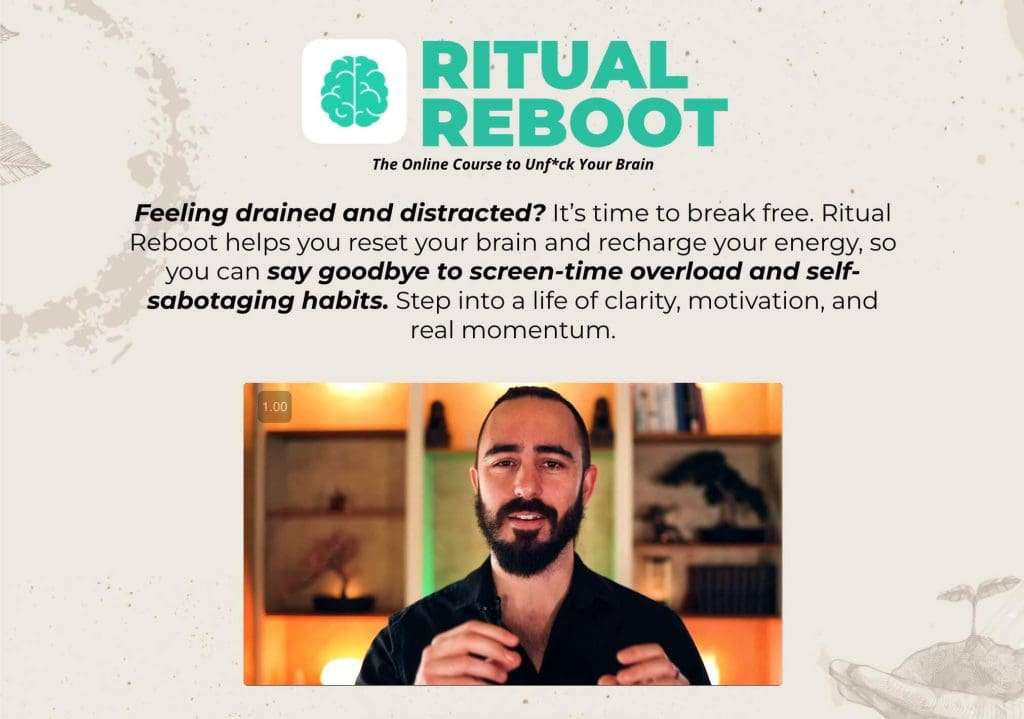
One resource that’s been transformative for me is the Ritual Reboot program. I’ve revisited this course multiple times whenever I feel my relationship with technology affecting my motivation and focus. It provides a structured 7-day dopamine detox protocol that helps reset your brain chemistry and reestablishes healthier patterns.
The signs you might need a dopamine detox include:
- Compulsively checking your phone first thing in the morning
- Constantly seeking digital stimulation throughout the day
- Procrastinating on important tasks while getting lost in social media
- Relying on stimulants like coffee or sugar just to feel energized
- Finding it difficult to fall asleep or maintain a consistent sleep schedule
- Noticing that laziness feels more rewarding than making progress
Through a proper dopamine reset, you can recalibrate your brain’s reward system so normal activities feel satisfying again. When the baseline shifts back to normal, motivation naturally returns without having to force it.
Click HERE to watch the video and learn more.
4. Habit Stacking and Triggers
Don’t rely on motivation to remember what to do – create environmental triggers that prompt your actions automatically. Habit stacking involves attaching new habits to existing ones, creating a natural flow from one action to the next.
For example, “After I brush my teeth, I will meditate for two minutes” or “After I pour my morning coffee, I will write down my top three priorities for the day.”
These environmental triggers bypass the need for motivation by creating automatic behavior patterns.
5. Environment Design
Your environment often determines your actions more than motivation does. If you want to read more, place books in visible locations around your home. If you want to eat healthier, keep nutritious options readily available and less healthy choices out of sight.
This approach acknowledges that willpower and motivation are limited resources. Instead of depleting them through constant decision-making, design your environment to make preferred actions easier and less preferred actions harder.
6. The 5-Minute Rule
Commit to just five minutes of the activity you’re avoiding. This tiny commitment bypasses resistance because it feels manageable regardless of motivation level.
Once you start, two things typically happen: either momentum builds and you continue naturally, or you complete at least those five minutes, which is better than nothing. Either way, you’ve broken through the initial resistance without needing motivation.
7. Progress Tracking
The visual representation of progress creates a powerful psychological reward that can substitute for motivation. When you can see how far you’ve come, continuing becomes easier.
Whether it’s a simple habit tracker, a progress journal, or an app that visualizes your consistency, tracking creates a natural desire to maintain streaks and continue progression.
8. Accountability Partnerships
External accountability can bridge the gap when internal motivation fails. Having someone expecting you to show up or complete a task creates gentle pressure that often overcomes resistance.
The most effective accountability partnerships combine support with consequences. The right accountability partner understands when to push you and when to help you troubleshoot obstacles.
9. Energy Management vs. Time Management
Most productivity systems focus on managing time, but managing energy often matters more for maintaining drive and focus. Identify when your energy naturally peaks and schedule your most important tasks during those windows.
For instance, if you’re naturally alert and focused in the morning, schedule creative or challenging work then, saving administrative or routine tasks for afternoon energy dips.
10. Value-Based Decision Making
Create a personal value hierarchy that clarifies what matters most to you. When motivation wanes, refer to this hierarchy to reconnect with why specific actions matter.
This approach transforms tedious tasks by connecting them to meaningful outcomes. For example, filing paperwork might seem boring, but if it connects to your value of security and peace of mind, it takes on greater significance.
11. The Motivation Maintenance Plan
Just as your car needs regular maintenance, your motivation system requires ongoing care. Create a personal “maintenance plan” that includes:
- Regular physical movement
- Adequate sleep
- Nutritious foods
- Social connection
- Time for reflection
- Celebratory rituals for progress
- Periodic reassessment of goals and methods
This maintenance prevents major motivation breakdowns rather than trying to fix them after they occur.
When Self-Motivation Isn’t Enough
Recognizing Deeper Patterns
Sometimes persistent motivation struggles point to deeper patterns that need addressing. This isn’t about medical labels or external interventions—it’s about honest self-assessment and taking ownership of your wellbeing at a more fundamental level.
If you notice your motivation consistently depleted across multiple areas of life for extended periods, consider exploring:
- Your sleep patterns and quality
- Nutritional gaps that might be affecting your energy
- Movement habits (or lack thereof)
- Your relationship with technology and information consumption
- Social connections and relationship health
- Alignment between your daily actions and deeper values
- Spiritual or mindfulness practices that ground you
These root systems form the foundation of your natural motivation and drive. When they’re compromised, no amount of motivation techniques can fully compensate.
The solution isn’t outsourcing your wellbeing, but rather taking radical responsibility for these foundational elements of human thriving. Often, simple but consistent improvements in these areas restore natural energy and drive without needing complex interventions.
The Modern Focus Challenge
I’m going to be straight with you about something I feel strongly about: the massive increase in adult ADD/ADHD diagnoses isn’t helping people – it’s often holding them back. These labels can become self-fulfilling prophecies that convince people they have permanent “conditions” rather than symptoms that respond to lifestyle changes.
I was diagnosed with ADD in my early twenties, long before it became a common diagnosis and well before our current technology landscape. What I’ve learned since then is that these labels often mask what’s really happening: our attention-fracturing digital environment is rewiring our brains.
The symptoms are real – difficulty focusing, procrastination, feeling overwhelmed, inconsistent motivation. But calling these symptoms a permanent disorder can be incredibly disempowering when many people could reclaim their natural focus through intentional lifestyle practices.
This is exactly why I’ve found programs like Ritual Reboot so valuable. Rather than accepting a label and depending on medication, this structured 7-day dopamine detox provides concrete steps to reset your neurochemistry and rebuild healthier attention patterns. I’ve returned to this program multiple times when I notice my focus deteriorating, and it’s consistently helped me get back on track.
Before accepting a label as your identity, consider experimenting with:
- Implementing a structured dopamine detox
- Creating distraction-free work environments
- Practicing single-tasking instead of multitasking
- Establishing consistent daily routines
- Prioritizing quality sleep
- Limiting information input
- Reducing or eliminating stimulants like caffeine
The most empowering approach is focusing on what you can control – your environment, habits, and daily practices – rather than accepting a label that suggests your brain is permanently wired for distraction. Taking ownership of these factors can transform your ability to concentrate and maintain motivation.
Even More Reading On Related Topics:
- 160 Inspiring Good Morning Quotes to Transform Your Day
- How to Get Unstuck in Life: 7 Steps to Create Real Change
- How to Change Your Mindset & Shift Your Reality
Frequently Asked Questions About Self Motivation
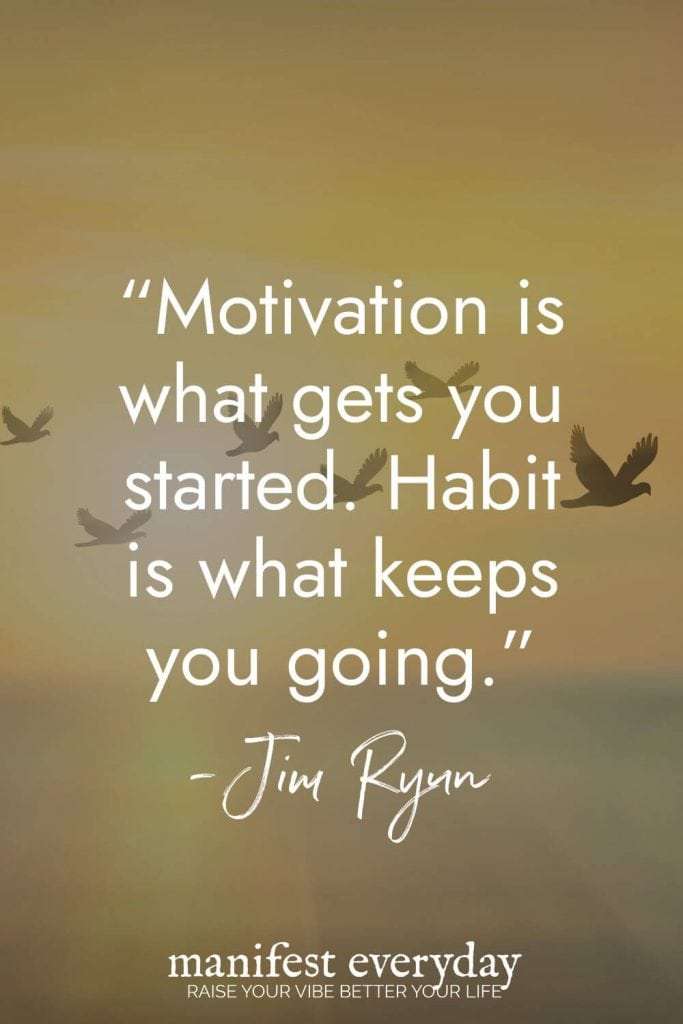
Self-motivation comes and goes based on your emotional state, while discipline involves building systems and habits that continue regardless of how you feel. Motivation is the initial spark that gets you started, but discipline is what keeps you going when that spark inevitably fades.
If you’ve tried multiple approaches without improvement, consider whether you’re pursuing goals that genuinely matter to you. Sometimes lack of motivation is valuable feedback that you’re on the wrong path. Ask yourself: “If motivation and willpower weren’t issues, would I still want this outcome?” If the answer is no, you might need to reassess your goals rather than your motivation techniques.
This question reflects a common misconception. You don’t “build” self-motivation like a muscle – you create systems that work regardless of motivation. The better question is: “How long does it take to build effective habits and identity-based systems?” The honest answer is that it varies tremendously from person to person.
For me, it took well over two years before working out felt like a true habit. Now I feel strange if I don’t exercise – like I haven’t brushed my teeth in the morning. The transformation from “something I make myself do” to “something that feels odd not to do” happened gradually and took much longer than the popular “21 days to form a habit” myth suggests.
Some people might establish new patterns in a few weeks, while others (like me) need years of consistent practice. What matters isn’t the timeline but your willingness to keep showing up even when it doesn’t feel automatic. The small benefits begin appearing much sooner than the complete habit formation, which helps sustain you through the longer process.
The most powerful tool for developing motivated children isn’t lectures about trying harder – it’s modeling identity-based action yourself. Children learn from watching you continue with important activities even when you don’t “feel like it.” Teach them that feelings are temporary but values and identity can guide consistent action
Self Motivation Words of Truth: The Takeaway
Motivation isn’t something you find – it’s something you create through intentional systems and identity shifts. When you stop depending on feeling motivated and start building reliable processes, you become unstoppable in a way that motivation alone could never accomplish.
The most powerful self motivation books don’t just pump you up temporarily – they help you understand that motivation was never the point. The point is creating a life where your actions align with your values and identity so deeply that motivation becomes largely irrelevant.
NOW OVER TO YOU: Which of these self-motivation techniques resonates most with your current situation? What’s one small step you could take toward using it today? Remember, true self-motivation isn’t about feeling perfect before acting – it’s about taking that first step regardless of how you feel.
Did you find this info helpful? Save THIS POST to your Personal Growth or Motivation board on Pinterest!