





Last Updated on May 8, 2025 by Jess Brown
The Let Them Theory changed my perspective on control in ways I never expected, especially in my most cherished relationships. We’ve all been there—trying to orchestrate outcomes, manage other people’s behavior, or force situations to unfold exactly as we imagined. But what if the path to peace isn’t through control, but through consciously choosing to let go?
Recently popularized by motivational speaker Mel Robbins, this simple yet profound concept asks us to pause when we feel that urge to control and instead say to ourselves, “Let them.” Let them make their own choices. Let them live with their own consequences. Let them be exactly who they are—not who we wish they would be.
I’ve struggled with this myself. While I love my husband dearly, his habit of leaving crumbs on the counter used to drive me crazy. For years, I’d nag and bicker about these small messes, creating tension over something that took mere seconds to clean. The battle wasn’t worth the cost to our relationship, but I couldn’t seem to let it go.
In this post, I’m sharing 27 powerful quotes that capture the essence of the Let Them Theory, along with practical insights on how to apply this liberating concept in your relationships, work, and personal growth journey. Whether you’re dealing with a messy spouse, difficult colleagues, or your own controlling tendencies, these reminders can help you release what you can’t control and find the peace that comes with letting go.
Understanding the Let Them Theory
The Let Them Theory isn’t complicated, but it is revolutionary. At its core, this approach invites us to recognize when we’re trying to control people or situations beyond our influence, and simply… let them be.
As Mel Robbins explains, when we try to control others, it’s like paddling a tiny boat upstream against a powerful current. We exhaust ourselves fighting against what’s natural, wasting enormous energy on battles we can’t win. The Let Them Theory is about turning your boat around and flowing with the current instead of against it.
This doesn’t mean becoming passive or apathetic. Rather, it’s about discerning what’s truly yours to manage and what isn’t. It’s about recognizing that other adults are responsible for their own choices, and that your energy is better spent focusing on your own actions and responses.
What makes this theory so powerful is how it transforms relationships. When I finally stopped nagging my husband about kitchen messes and just handled the small cleanups without comment, our home became more peaceful. The fifteen seconds it took to wipe the counter weren’t worth the hours of tension that came from trying to change him.
The Let Them Theory helps you see people as they actually are, not as the potential you imagine. This clarity is invaluable—because you can’t have an authentic relationship with someone’s potential. You can only truly connect with who they are right now.
Why I Love The Let Them Theory Book
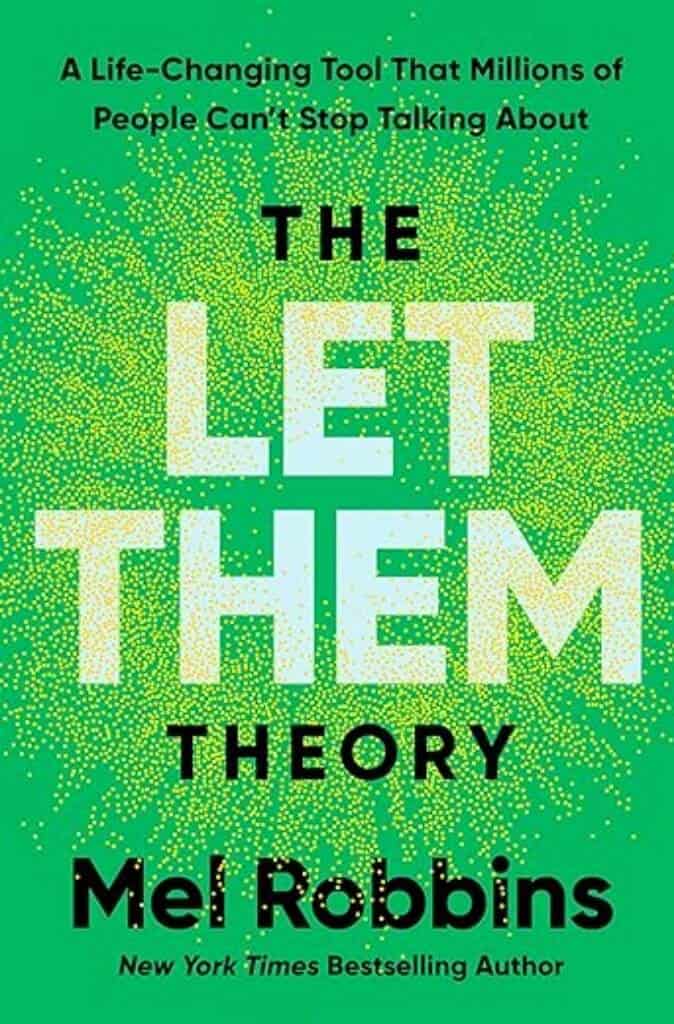
I recently picked up Mel Robbins’ book “The Let Them Theory,” and honestly? It’s been really helpful for me. I feel a lot more peaceful in my relationships.
This isn’t just another self-help book making big promises. Mel breaks down this deceptively simple concept—just two words, “Let Them”—in a way that’s immediately applicable to real life.
What resonated most with me was her take on how much energy we waste trying to control things we simply can’t change. I found myself reflecting on relationships where I’d been stuck in patterns of frustration, trying to “fix” situations that weren’t mine to fix. The relief that comes with redirecting that energy toward what actually matters is profound.
The book walks through eight areas of life where we can apply this theory, from relationships to work to personal goals. I found myself nodding along and highlighting passages that felt like they were written specifically for me.
If you’re finding yourself exhausted from trying to manage everyone else’s behavior or constantly worried about what others think, I can’t recommend this book enough. It’s a #1 bestseller for good reason.
Why We Struggle to Let Go of Control
Our controlling behaviors don’t appear out of nowhere. They’re deeply rooted in our psychology and often begin in childhood. Understanding these roots can help us recognize and release our grip on the things we can’t—and shouldn’t — control.
For many of us, control is a misguided attempt to manage anxiety. When uncertainty feels threatening, we try to micromanage our environment and the people in it to create a sense of safety. This illusion of control temporarily soothes our fears but creates new problems in our relationships.
Control often masquerades as love. Maybe you had parents who controlled your every move “for your own good.” They likely believed that their hypervigilance was a form of protection and care. This pattern gets internalized, and we repeat it with others, thinking we’re showing love when we’re actually suffocating independence.
I’ve learned this lesson the hard way in my own marriage. What I thought was “helping” my husband become more organized was actually me trying to mold him into my image of what a partner should be. As I’ve gotten older, I’ve realized the wisdom of picking my battles. Some crumbs on the counter aren’t a hill worth dying on, especially when weighed against all the wonderful things he brings to our life together.
Another reason we struggle with control is that it’s easier to focus on fixing others than facing our own issues. When I’m obsessing over someone else’s choices, I’m often avoiding something uncomfortable within myself. The Let Them Theory invites us to redirect that energy inward, where it can actually create positive change.
Signs You’re Caught in the Control Trap
Recognizing when you’re stuck in patterns of unhealthy control is the first step toward freedom. The signs can be subtle, disguising themselves as care, responsibility, or even wisdom. Here are some indicators that you might be caught in the control trap:
You find yourself repeatedly offering unsolicited advice, even when people haven’t asked for your input. This often comes from a genuine desire to help, but can undermine others’ confidence and agency.
Physical tension is another common sign—clenched jaw, tight shoulders, or a knot in your stomach when things aren’t going “according to plan.” Your body often recognizes your controlling tendencies before your mind does.
For me, one of the clearest signs has been my reaction to social media. I used to get pulled into arguments with strangers, trying to change minds and correct what I saw as dangerous misinformation. I’d waste time crafting the perfect responses, only to end up frustrated and depleted. Eventually, I realized that no minds were changed in comment sections, and I could simply let people believe what they want to believe. That shift brought tremendous peace.
You might also notice that you’re mentally rewriting conversations long after they’ve ended, thinking of all the things you “should have said” to convince someone. Or perhaps you’re rehearsing future conversations, trying to script both sides to ensure your desired outcome.
Another indicator is feeling personally responsible for other people’s emotions or decisions. When you believe it’s your job to make someone happy or prevent them from making mistakes, you’ve overstepped the natural boundaries of healthy relationships.
The good news is that recognizing these patterns is powerful. Each time you notice yourself slipping into control mode, you have an opportunity to pause, take a breath, and whisper to yourself, “Let them.” This simple practice can gradually transform your relationships and restore your peace of mind.
Powerful Let Them Theory Quotes for Relationships
Relationships offer endless opportunities to practice the Let Them Theory. Whether with partners, family members, or friends, our closest connections often trigger our strongest controlling impulses.
These quotes capture the wisdom of letting go in relationships:
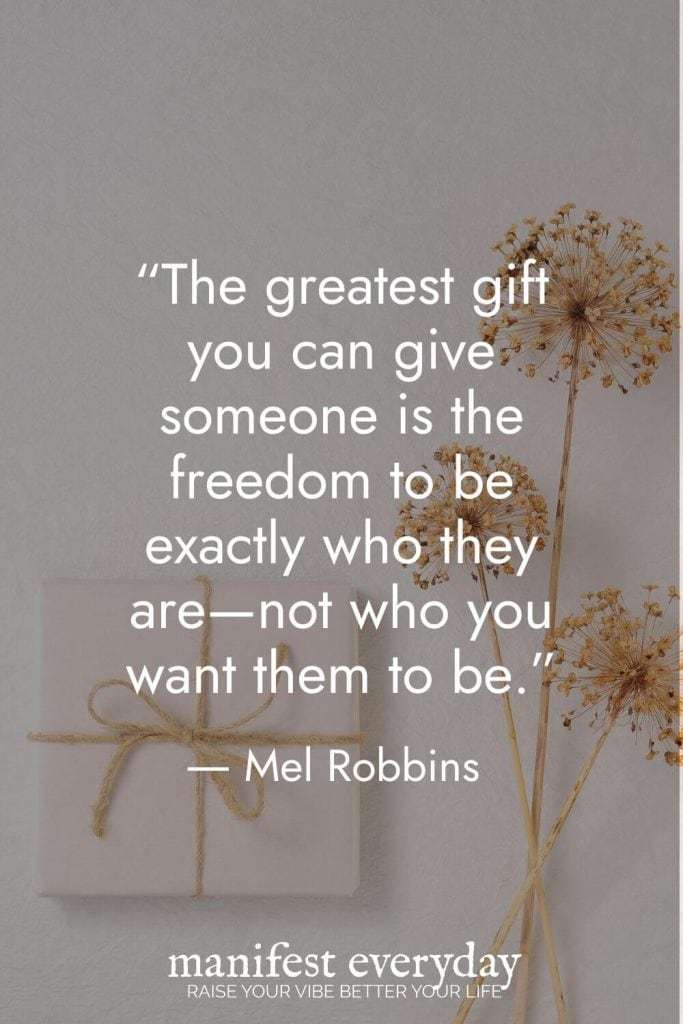
“The greatest gift you can give someone is the freedom to be exactly who they are—not who you want them to be.” – Mel Robbins
“Love is freedom. If you try to control it, you’ll destroy it.” – Unknown
“When you stop trying to change others and work on changing yourself, your whole world changes.” – Roy T. Bennett
“A successful relationship requires falling in love many times, always with the same person. Not the person you imagine them to be, but who they actually are.” – Unknown
“Instead of trying to control your partner, try to control your need to control.” – Diana Denholm
“Let people be who they are. Don’t try to fix, rescue, or save them. Just love them, embrace them, and accept them where they are.” – Mandy Hale
“True connection begins when you accept people exactly as they are, messiness and all.” – Mel Robbins
“When you release expectations, you’re free to enjoy things for what they are instead of what you think they should be.” – Mandy Hale
My own relationship transformed when I stopped treating my husband like a renovation project. Those kitchen counter crumbs? They’re just crumbs, not character flaws. When I stopped fighting this small battle, I created space for appreciation of all the ways he shows up for our relationship and household. Sometimes love looks like simply wiping the counter without comment and moving on with your day.
Let Them Theory Wisdom for Work and Career
Professional environments can be particularly challenging places to practice the Let Them Theory. With deadlines, team dynamics, and career advancement at stake, the urge to control others can feel almost instinctual. Yet it’s often in these settings where letting go yields the most powerful results.
I was recently talking with a family member about a high-drama workplace situation she was facing. She was consumed with worry about what colleagues might be saying about her behind closed doors. I reminded her that she couldn’t control their thoughts or words – she could only control her own actions and responses. “Let them think what they want,” I told her. “It’s not your business, and there’s no benefit in stewing over it or trying to change it.”
These quotes offer perspective on applying the Let Them Theory in professional settings:
“Micromanagement is the destroyer of momentum.” – Miles Anthony Smith
“The greatest leader is not necessarily the one who does the greatest things. They are the one who gets people to do the greatest things.” – Ronald Reagan
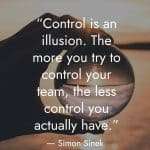
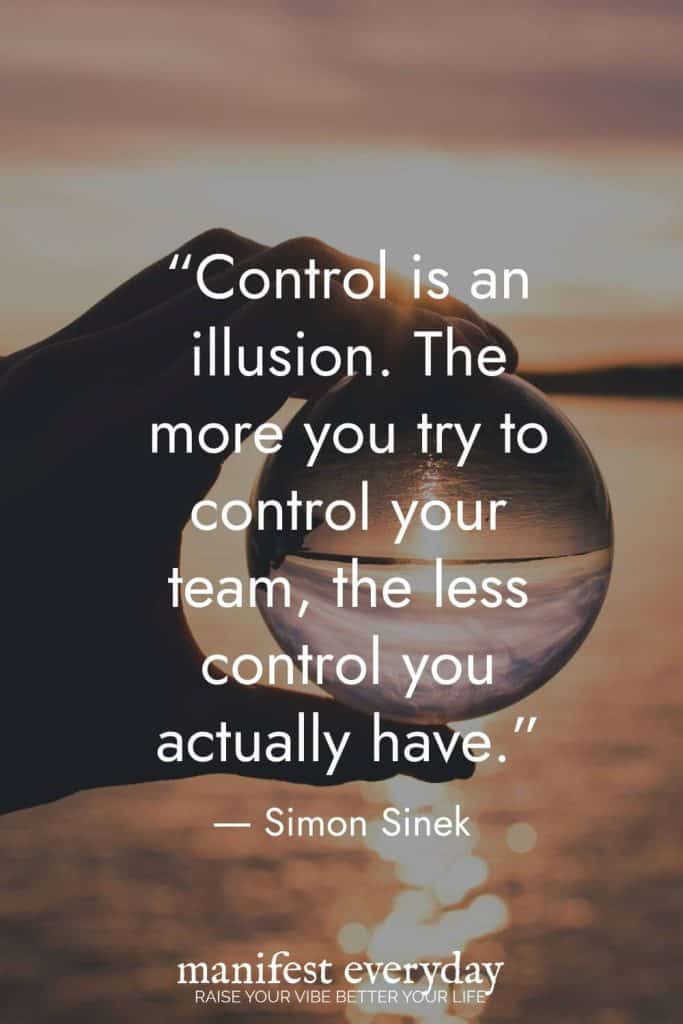
“Control is an illusion. The more you try to control your team, the less control you actually have.” – Simon Sinek
“True delegation isn’t assigning tasks. It’s transferring ownership and letting go of the outcome.” – Unknown
“When you stop hovering, people start growing.” – Craig Groeschel
“Your need to control is directly proportional to your lack of trust.” – Robin Sharma
“Great leaders don’t tell people what to do. They show them what’s possible and then get out of the way.” – Unknown
Would you like to save this?
Unsubscribe any time and I'll never share your information.
“The art of leadership is knowing when to step up and when to step back.” – Mel Robbins
The Let Them Theory doesn’t mean abdicating responsibility at work. Rather, it means distinguishing between accountability and control. You can hold people accountable while still letting them find their own path to results. This approach builds confidence, creativity, and genuine commitment – qualities that micromanagement inevitably crushes.
Embracing the Let Them Theory for Personal Growth
Maybe the most challenging application of the Let Them Theory is with ourselves – letting go of our own limiting beliefs, perfectionism, and self-judgment. When we release our death grip on who we think we should be, we create space to discover who we actually are.
These quotes illuminate how the Let Them Theory supports personal growth:
“Your need to control your life is based on fear. Your willingness to let go is based on love.” – Gabrielle Bernstein
“Surrender to what is. Let go of what was. Have faith in what will be.” – Sonia Ricotti
“The day I let go of who I thought I needed to be was the day I discovered who I truly am.” – Unknown
“Control is never achieved when sought after directly. It is the surprising outcome of letting go.” – James Arthur Ray
“Freedom comes when you stop trying to manipulate life and start embracing it exactly as it is.” – Martha Beck
“Let go of the need to know exactly how it will all turn out. Trust yourself enough to know that whatever happens, you’ll handle it.” – Mel Robbins
“The moment you accept yourself completely is the moment you reclaim your power.” – Kristin Lohr
“Peace is not the absence of challenges. It’s the absence of the need to control them.” – Brené Brown
The irony of personal growth is that it often requires us to stop trying so hard. When we loosen our grip on outcomes and expectations, we create space for authentic development. This isn’t about lowering standards – it’s about exchanging rigid control for flexible resilience.
The Let Them Theory and Setting Boundaries
While the Let Them Theory is about releasing control over others, it doesn’t mean abandoning all boundaries. In fact, clear personal boundaries are essential to practicing this approach in a healthy way.
One boundary I’ve maintained is around phone calls. I genuinely dislike talking on the phone—probably from years working with crime victims where I spent all day on difficult calls. At first, friends were put off when I explained my preference for texting. But by holding this boundary while offering flexibility in other ways (like occasional video chats), I’ve found a middle ground that honors both my needs and my relationships.
These quotes help clarify the important relationship between boundaries and letting go:
“Boundaries are not about controlling others. They’re about clarifying what you will and won’t accept, then letting others choose how they’ll respond.” – Henry Cloud
“The difference between boundaries and control: boundaries change you, control tries to change others.” – Unknown
“‘Let them’ doesn’t mean letting people harm you. It means letting them be responsible for their own choices while you’re responsible for yours.” – Mel Robbins
“Letting go isn’t about having no standards. It’s about understanding which standards are yours to uphold and which are others’ responsibility.” – Unknown
“You can release control without releasing discernment.” – Glennon Doyle
“Setting boundaries is an act of self-respect, not control.” – Nedra Glover Tawwab
“The art of peace is to let people be who they are while being clear about who you are.” – Mark Nepo
“True freedom comes from defining your limits clearly, then letting everything else go.” – Cheryl Richardson
The Let Them Theory works best when paired with healthy boundaries. The key distinction is this: boundaries define what you will do; control tries to dictate what others will do. When you focus on the former and release the latter, you create relationships built on mutual respect rather than manipulation.
Applying the Let Them Theory in Daily Life
The Let Them Theory sounds beautiful in concept, but the real challenge is implementing it in our everyday moments of frustration, fear, and the impulse to control. How do we actually practice this approach when our controlling instincts kick in?
Start small. Notice minor irritations — like crumbs on the counter or a colleague’s different working style—and use these as opportunities to practice letting go. These smaller moments build the “letting go muscle” that will serve you in bigger challenges.
Create a personal “Let Them” mantra. When you notice yourself slipping into control mode, take a deep breath and silently repeat: “Let them be who they are. Let this be what it is.” This simple pause can interrupt the controlling pattern before it gains momentum.
Focus on what you can control—yourself. As I’ve gotten older, I’ve learned to focus my energy on the things within my sphere of influence rather than wasting it on things I can’t change. This approach brings tremendous peace, especially when dealing with difficult people or situations.
Remember that letting go is a practice, not a perfect state of being. Some days you’ll nail it; other days, you’ll fall back into old patterns. The Let Them Theory isn’t about perfection—it’s about progress and self-awareness.
Practice regular self-compassion. Often, our controlling tendencies come from our own anxiety and unmet needs. By treating yourself with kindness, you reduce the internal pressure that drives controlling behavior.
These quotes can serve as daily reminders as you integrate the Let Them Theory into your life:
“Each time you notice yourself trying to control outcomes, gently redirect that energy toward accepting what is.” – Eckhart Tolle
“You’ll be amazed at how much mental energy is freed up when you stop trying to script other people’s lives.” – Mel Robbins
“Today, just for today, try believing that everyone is doing the best they can with what they have. See how that changes everything.” – Unknown
“The moment you accept that some things are outside your control is the moment you begin to truly live.” – Unknown
Even More Reading On This Topic:
- How to Speak to Yourself to Manifest + Journal Prompts for Real Change
- How to Be More Positive: 27 Journal Prompts to Shift Your Mindset
- Quotes for Difficult Times: Why Some Transform Us While Others Fall Flat
Frequently Asked Questions About the Let Them Theory
As you begin to explore and implement the Let Them Theory in your own life, you might have some questions about how it works in practice. Here are thoughtful answers to some common questions:
Absolutely not. The Let Them Theory is about releasing your need to control others, not abandoning your own boundaries or self-respect. In fact, clear boundaries are essential to practicing this approach in a healthy way. The difference is that boundaries are about what you will do, while control tries to dictate what others will do. For example, I maintain my boundary about not talking on the phone, but I don’t try to control how others communicate with each other.
This is about discernment. Ask yourself: “Is this genuinely harmful, or just different from how I would do it?” “Is this actually my business?” “Am I trying to protect someone from natural consequences that might actually help them grow?” If someone’s behavior directly impacts your wellbeing or violates your boundaries, that’s when to speak up. If you’re just uncomfortable with their different approach or choices, that’s when to practice letting go.
Guidance is different from control. Even in leadership positions, the Let Them Theory can help you distinguish between providing direction and trying to force specific outcomes. Great parents and managers create frameworks for success, then give others the space to find their own path within those frameworks. This builds confidence, creativity, and intrinsic motivation in ways that micromanagement never can.
This anxiety is normal and even expected. Our controlling behaviors often developed as coping mechanisms for dealing with uncertainty. When you notice that discomfort, take a deep breath and remind yourself that your anxiety doesn’t necessarily signal danger—it’s just your system adjusting to a new way of being. Start with small, low-risk situations to practice letting go, and gradually build your tolerance for that initial discomfort.
Definitely. Many of us are even more controlling with ourselves than we are with others. We have rigid expectations about how we “should” feel, think, and behave. Practicing the Let Them Theory with yourself might look like: “Let me feel disappointed without immediately trying to fix it.” “Let me have this imperfection without harsh self-judgment.” This self-compassion creates space for authentic growth rather than forced change.
You might experience immediate relief in certain situations—like when you decide to stop arguing on social media and feel that weight lift from your shoulders. Other changes develop more gradually as you consistently practice letting go. What’s interesting is that even small shifts in your approach can create ripple effects, improving multiple relationships simultaneously as your energy changes.
With these questions addressed, you’re better equipped to start implementing the Let Them Theory in ways that respect both your needs and the autonomy of others. Remember that this is a practice, not a perfect state of being—and each time you catch yourself in control mode is an opportunity to choose differently.
Conclusion: Embracing the Freedom of the Let Them Theory
The Let Them Theory offers a pathway to peace that might seem counterintuitive at first. By releasing our grip on what we can’t control—other people’s choices, circumstances beyond our influence, outcomes we can’t guarantee—we actually gain more freedom and joy in our lives.
I’ve found that these small acts of letting go, whether with household frustrations or social media arguments, eventually build into a life-changing practice. There’s profound liberation in recognizing what’s yours to manage and what isn’t. It doesn’t happen overnight, but with each conscious choice to “let them,” we create more space for authentic connections and genuine peace.
NOW OVER TO YOU: How might your relationships transform if you applied the Let Them Theory in one area of your life? Which of these Let Them Theory quotes resonates most deeply with your current situation?
Did you get value out of this post? Save THIS POST below to your Mindset board on Pinterest. 🙂